Who owns which meeting action items, and when?
Promises made in passing are the first meeting action items to slip. MarsDataAI puts each owner, task and due date into one table.
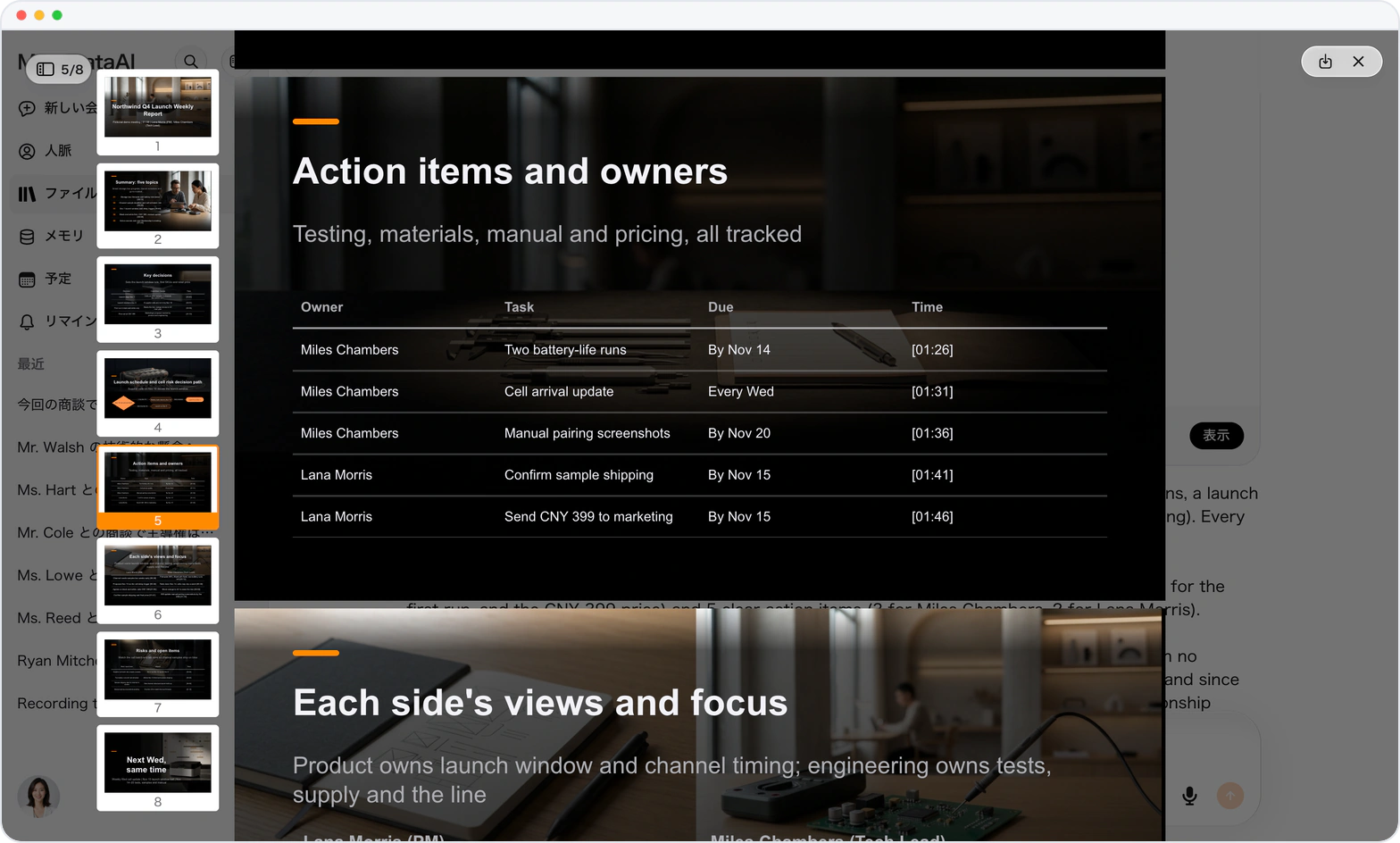
The action items slide lists owner, task, due date and time in the recording, one item per row. A promise made in passing ("I'll send it to you") and a standing duty ("sync every Wednesday") count too, and a long list continues on a second slide instead of being merged. Key decisions get their own slide with any "if this, then that" condition kept whole. Before building the deck, MarsDataAI goes back over the meeting for commitments and decisions only and adds any it missed. Every row carries its [mm:ss] time, and the speaker notes say who said it and what was said, so you can jump straight to that moment.
Action items from meeting, one row each
The meeting action items slide lists owner, task, due date and the time in the recording, with one item per row. Promises made in passing, such as I will send it to you, count as well as standing duties like a weekly sync on Wednesdays. A long list continues on a second slide instead of being merged into one line. Key decisions get their own slide, and any if-this-then-that condition stays whole.
Checked against the recording before the deck is built
Before the deck is built, MarsDataAI goes back over the meeting for commitments and decisions only, and adds any it missed on the first pass. Every row carries its [mm:ss] time, and the speaker notes say who said it and what was said, so you can jump straight to that moment in the recording. Each item is easy to verify, and you can confirm any owner or date in one glance.
Everyone leaves with their own task and date, and nobody has to ask "who owns this?" again.
See the rest of Meeting Notes & Report Decks in MarsDataAI Wiki.